Solar Flare Lab
Dial in a magnetic setup, then see the kind of solar flare it might produce – class, timing, and a GOES-style light curve.
Friendly note: This is a simplified, playful solar-flare simulator. Real flares are extremely complex and can’t be predicted from a few sliders, so the controls here use compact 0–10 scales instead of true physical units. Most flare curves shown are synthetic GOES-style examples, not real observational data. Only the famous presets marked as “real data” use actual X-ray light curves.
Build your flare
Famous presets
Tip: click a preset to load an event, or move any slider to switch back to a fully synthetic custom flare.
Magnetic setup
Roughly how big the sunspot group is. Higher values mean a sprawling, broad active region; lower values are smaller, more compact patches on the Sun.
How tangled the magnetic polarities are, using the Mount Wilson classes. More complex regions are generally more flare-prone.
How stressed the magnetic field lines are compared to a relaxed configuration. High values mean lots of shear and twist waiting to unwind in a flare.
A qualitative dial for how much free magnetic energy the region has built up. More stored energy tends to push you toward stronger flares.
GOES-style X-ray light curve
Curve chosen to match your flare class and timing. Bands show B / C / M / X levels.
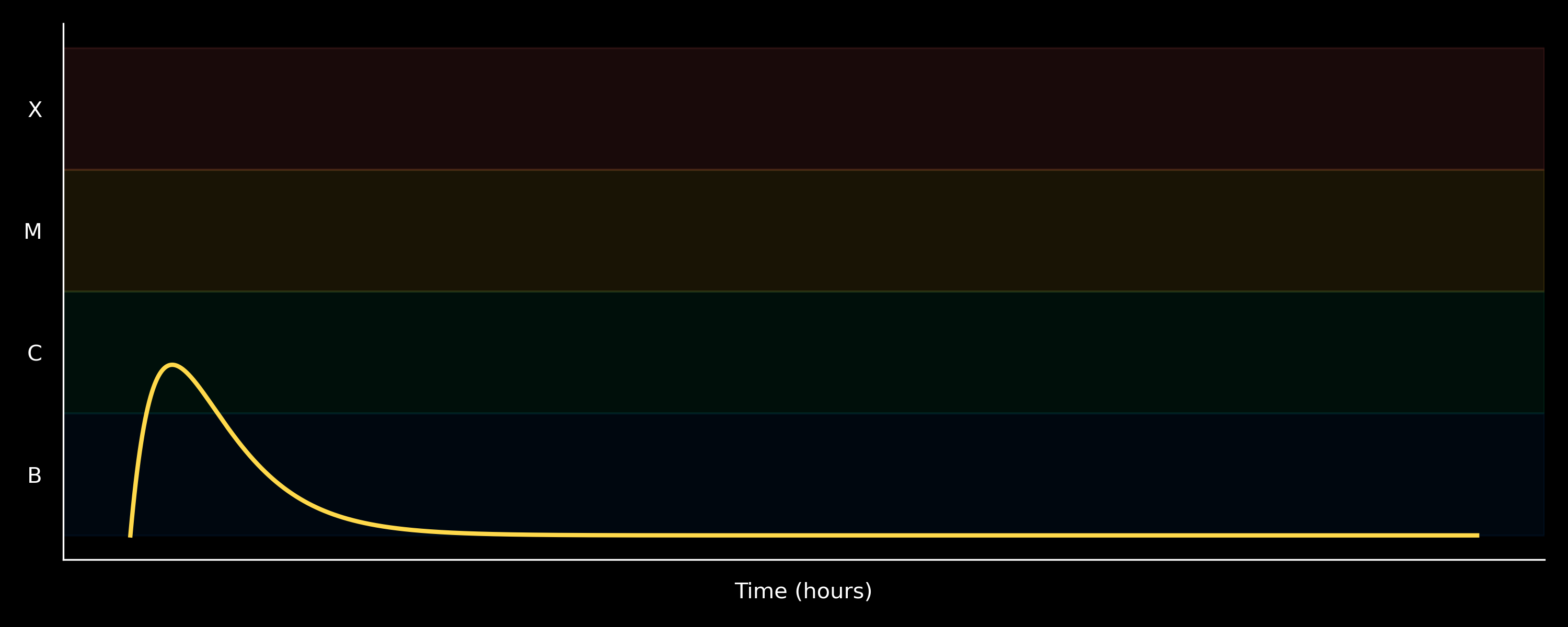
Curve source: synthetic GOES-style light curve (not real observational data).
Flare outcome:
C1–C2
A modest C-class flare with a fairly typical build-up and decay.
Personality: A middle-of-the-road flare – bright enough to notice, but not a show-stopper.
Possible space weather impacts
- Minor short-wave radio fading near the subsolar point.
- Small tweaks to ionospheric conditions; unlikely to cause major issues.